All Show, No Brew: A Field Guide to Britain's Kitchen Items That Have Never Done a Day's Work
There is a teapot in Britain right now that has never met a tea bag. Not one. It was purchased, presumably, in good faith — perhaps at a garden centre, perhaps at a car boot sale in Driffield, perhaps as a 'little treat' during a difficult week. It was brought home, rinsed out once, filled with the faint smell of optimism, and then placed on the dresser. There it remains. A monument to the vibe. A dust collector with a spout.
And here's the thing: nobody is sorry. Not the teapot, not the owner, not the nation. Because Britain has quietly perfected a genre of kitchenware that exists purely to be looked at, and frankly, it's some of our best work.
The Taxonomy of the Kitchen Freeloader
We've done the fieldwork. We've been into the kitchens of the nation (politely, and with biscuits) and we can confirm the decorative kitchen prop comes in several distinct species.
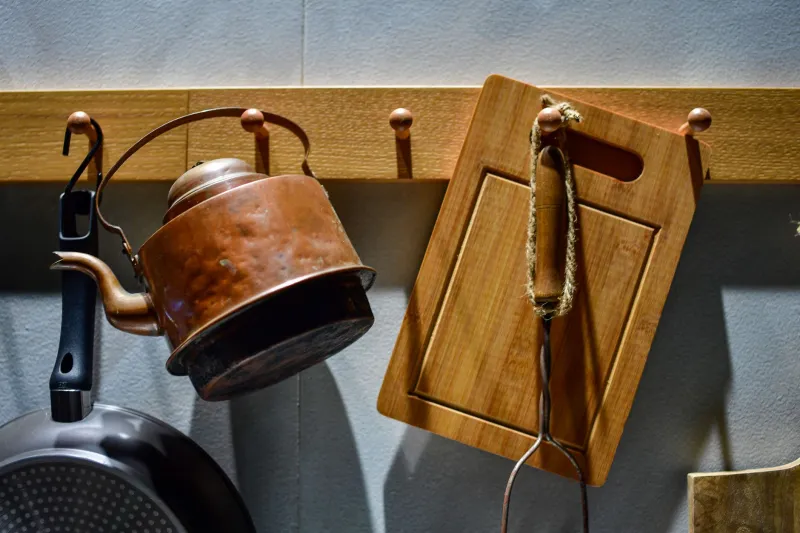
The Copper Kettle Without a Whistle. Hung above the Aga that's also mostly decorative, this kettle has the energy of a retired postman. It looks like it could boil water. It absolutely cannot — the inside is a museum of limescale and the handle hasn't moved since 1997. It doesn't need to work. It needs to suggest warmth to visitors.
The Bread Crock of Lies. A ceramic crock, usually with a charming hand-painted wheatsheaf on the front, that has never contained a loaf. It contains recipe cards, a spare candle, and a single birthday candle from a party in 2019. Bread, it turns out, lives in the bread bin. The bread bin is ugly. The crock is beautiful. These two facts have created an impasse that will outlive us all.
The Novelty Teapot That's Brewing Dust. Shaped like a cottage, a cat, a canal boat, or — in one legendary case — a cow with a slightly threatening expression. This teapot's entire career consists of being picked up once a year, dusted, and placed back down with the words 'we really should use this.' We will not use it. We know this. The teapot knows this.
The Decorative Colander. Usually enamel, usually mint green, usually hanging on a hook. It has strained nothing. Not a single pea. It is there because the hook was already there and the wall felt 'a bit bare.'
The Aga-Adjacent Cast Iron Pot. Too heavy to lift, too lovely to use, too expensive to admit was a mistake. It sits on the range radiating an aura of slow-cooked stews that will never materialise.
Why Do We Do This?
There's a serious answer buried in here somewhere, and it's this: kitchens used to be rooms you worked in. Now they're rooms you live in, which means they've inherited all the psychological baggage of the living room — including the desperate human need to fill horizontal surfaces with meaningful-looking objects.
A working kettle says 'I make tea.' A decorative kettle says 'I am the kind of person around whom tea happens.' It's set dressing for a lifestyle. It's the kitchen equivalent of the throw that nobody's allowed to sit under, or the cushions that rule the sofa with zero seating provided.
There's also a whiff of inherited glamour about it. Your nan had a dresser full of china that was 'for best' — items so ceremonially protected they may as well have been in a glass case with an alarm. We've simply carried on the tradition. The 'for best' teapot has evolved. It no longer waits for visitors. It waits for nothing. It has achieved peak ornament.
A Quiet Word About the Dust
Let's spare a thought for the interior of these objects. Inside every decorative teapot is a fine layer of grey felt — the slow, patient accumulation of a decade of doing absolutely nothing. It's almost impressive. Some of these items have collected more dust than a gym membership collects guilt.
And honestly? We say leave it. Washing it would break the spell. That teapot hasn't been touched by water since the Blair government. It is preserved, like a bog body, in a state of perfect decorative suspension.
In Defence of the Pointless Prop
At Mad Lad Designs, we hold a simple truth to be self-evident: not everything needs to be useful. Some things just need to be daft. A cow-shaped teapot that brews nothing but dust is doing something a working kettle never could — it's making you smile on a grey Tuesday while you wait for the toaster.
So here's to the copper kettle that couldn't boil water in a heatwave. To the bread crock guarding its lonely birthday candle. To the novelty teapot, the decorative colander, and every other beautiful freeloader squatting on Britain's kitchen counters.
You've done nothing. And we wouldn't change a thing.
Got a kitchen ornament that's never worked a day in its life? We want to hear about it. Send us a photo of your laziest kitchenware — the dafter, the better.